30 January, 2026
Technology sector consolidation remained the dominant theme across Australia and APAC through late December 2025 and January 2026, as buyers prioritised scale, execution certainty, and defensible capability. AI-driven transformation continued to accelerate deal activity, with acquirers targeting assets that support automation, data integration, and AI-ready operating models. Cybersecurity, ERP modernisation, and MSP-led delivery models remained central as enterprises and governments sought to reduce vendor fragmentation while strengthening resilience. Regulated fintech activity reflected sustained demand for licensed infrastructure, compliance-grade workflows, and predictable recurring revenue. Across the market, both strategics and financial sponsors focused on assets that reduce delivery risk and shorten time-to-value. These transactions offer insight into where capital and strategy are concentrating.
Date: 15 December 2025 Value: ~A$7.5m
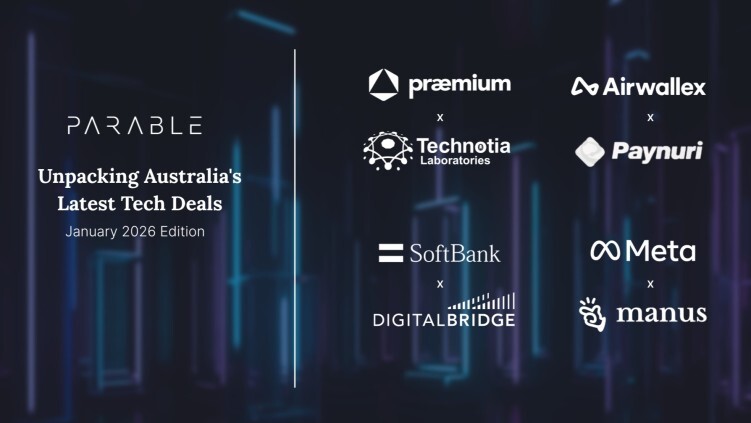
Praemium is an Australian listed wealth platform provider and strategic acquirer focused on scalable administration and advice infrastructure. Technotia Laboratories is an Australian advanced technology business with applied automation and AI-oriented engineering capability. The target specialises in workflow automation, data-driven tooling, and software execution aligned to regulated environments. Its primary exposure is to enterprise-style platform requirements within compliance-heavy financial services. Operationally, the acquisition internalises delivery capability to support Praemium’s product roadmap and platform development. The transaction addresses Praemium’s need to accelerate automation and AI readiness within core platform workflows. It fills an execution gap by reducing reliance on third-party developers and shortening delivery cycles for system modernisation. This supports regulatory compliance through more controlled and auditable change processes. The deal also strengthens recurring revenue economics by improving operational efficiency and platform differentiation. Ownership of automation capability positions the platform to meet rising enterprise and government-grade expectations.
The acquisition reflects ongoing consolidation through targeted capability buy-ins rather than large-scale platform mergers. It signals that internal automation and AI execution are becoming strategic assets in wealth and financial software. Investors and competitors should note the increasing emphasis on owning delivery capability in regulated platforms.
Date: January 2026 Value: undisclosed
Airwallex is an Australia-founded global payments and financial infrastructure provider operating as a strategic buyer in regulated fintech. Paynuri is a South Korea-based payments business with local operating infrastructure and regulatory positioning. The target’s capabilities include compliance-aligned payments processing and domestic market connectivity. Its customer base spans SME and enterprise clients requiring reliable, licensed payment services. Operationally, the acquisition enables Airwallex to operate directly within the Korean regulatory framework. Airwallex pursued the acquisition to secure regulatory access and operational control in a tightly supervised payments market. The deal closes a licensing and compliance gap that would be time-consuming to address organically. Direct control improves AI readiness by enabling consistent data capture for fraud monitoring and automated risk controls. It also enhances platform economics by reducing intermediary dependence and strengthening recurring revenue streams.
The transaction supports broader legacy system modernisation for customers seeking integrated payment stacks. This transaction highlights consolidation pressure in regulated payments infrastructure across APAC. It reflects platform expansion driven by licensing and compliance ownership rather than pure geographic growth. Investors should expect continued M&A where regulatory access materially impacts scalability and defensibility.
Date: 29 December 2025 Value: ~US$4.0bn
SoftBank is a Japan-headquartered strategic investor with a focus on technology-enabled infrastructure. DigitalBridge is a digital infrastructure platform with exposure to assets supporting cloud and AI-driven workloads. Its capabilities include asset aggregation, capital deployment, and operational management of compute-adjacent infrastructure. Customers include hyperscalers and large enterprises with long-term capacity requirements.
Operationally, the acquisition pairs SoftBank’s capital with an established infrastructure operating platform. The deal reflects rising demand for infrastructure capable of supporting AI-driven compute intensity. It fills a capability gap by giving SoftBank direct exposure to scalable infrastructure operations rather than minority investments. The platform supports AI readiness by enabling predictable capacity delivery and resilience. It also offers recurring revenue characteristics through long-duration contracts and high switching costs. The acquisition aligns with infrastructure modernisation cycles driven by cloud migration and enterprise continuity needs. The transaction signals continued consolidation around scaled digital infrastructure platforms. It represents platform expansion focused on control and execution capability. Competitors and investors should monitor increasing competition for infrastructure operators as AI demand tightens supply.
Meta acquires Manus AI (Butterfly Effect)
Date: January 2026 Value: ~US$2.0bn
Meta is a global technology company and active strategic acquirer of AI software capabilities. Manus AI (Butterfly Effect) is an APAC-linked AI software business with applied product development expertise. The target focuses on AI-driven functionality and software engineering suited to large-scale deployment. Operationally, the acquisition brings AI product teams and IP directly into Meta’s platform environment. Meta executed the acquisition to accelerate AI capability deployment under compressed development timelines. The deal fills a talent and execution gap in production-grade AI software delivery. It supports AI readiness by consolidating tooling, data pipelines, and development practices. The transaction also strengthens platform depth by internalising IP tied to engagement and monetisation workflows. It aligns with long-term platform economics where AI functionality underpins recurring usage and revenue.
The acquisition reflects consolidation at the AI application and product team level. It represents defensive platform expansion amid intense competition for AI talent. Investors should note the increasing willingness of global strategics to acquire AI capability rather than rely solely on internal build paths.